

Meal Planning
You’ve heard it before: ‘You are what you eat’. While this is not literally true (you won’t turn into a donut or hamburger if that’s what you had for lunch), there is merit in offering your body what it needs to maintain optimal function. Understanding what your body is made of can help you nourish your body with the right nutrients in the right proportions.
Have a look at this diagram which shows the approximate make-up of a healthy human body:
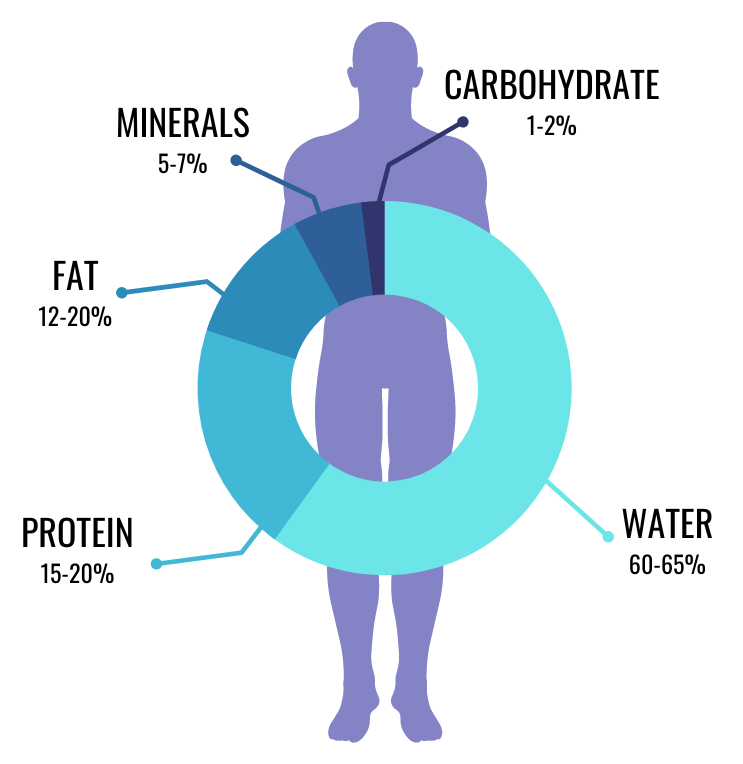
Consider the proportion of carbohydrates in your body:
Does it surprise you that your body contains less than 5% carbohydrates? It’s true. Carbohydrates exist in 2 forms in your body:
- Glucose which is circulating in your blood and dissolved in the fluid within your body cells
- Glycogen, which is a short-term storage form of carbohydrate that can quickly be broken down into glucose for rapid energy supply to your body cells. Glycogen is stored in the liver (about 100g) and in muscle cells (200-500g).
Carbohydrates make up a tiny proportion of your body weight.
So, why are we told to eat plenty of pasta, potatoes, rice and other grains for energy?
The idea that carbohydrates are needed for energy was born out of outdated medical research that blamed fat and dietary cholesterol for heart attacks, diabetes and strokes. We have learnt a lot since the old dietary guidelines were implemented in the late 1960’s and early 1970’s. Authorities encouraged us to eat plenty of carbohydrates and cut down on fat, which we did. And since then, diabetes rates have exploded, people are suffering more heart attacks, strokes, dementia, and other illnesses associated with inflammation and obesity than ever before.
When you eat a carbohydrate, it breaks down into glucose which is absorbed into your blood.

To keep your blood sugar normal, your pancreas releases insulin which transports glucose from your blood into your body cells where the glucose can either be used for energy or converted to fat. Insulin acts as the key to your cell which allows glucose to pass through the cell membrane.

Once the glucose is inside your cell, insulin also stimulates the conversion of glucose to fat.
When your blood sugar level drops under the influence of insulin, you feel hungry again and crave more carbohydrates. Insulin makes you feel tired. Insulin stimulates your appetite, insulin causes cravings and insulin stimulates fat storage. Insulin is also an inflammatory hormone that upsets your metabolism. Having a lot of insulin around is not good at all.
You don’t NEED to eat carbohydrates.
Say, what?
It’s a fact. Your metabolism is suited to survival without any carbohydrates. Even though your brain is happy working with glucose as its primary fuel, it can adapt to use ketones (the break-down product of fats). And, your body can make glucose from fat and protein molecules if it needs to.
Certainly, some unrefined carbohydrates like oats or wild rice contain vitamins and minerals and fibre, but the nutrient-density of carbohydrates is typically lower than that of vegetables, fruits and pulses. What this means is that for the number of calories you are getting, you get proportionately less benefit from healthful nutrients when you eat carbohydrates.
You have to weigh up the benefit of eating carbohydrates versus the potential for those carbs to stimulate insulin release in your body and disrupt your metabolism.
Around the world, dietary guidelines are being re-written because we are starting to realise that high-carbohydrate intake is not necessary and may actually be poisonous.
Recommendations are changing and most newer dietary guidelines place greater emphasis on plant-based foods like vegetables.
Now, think about how much water you are made of:
Going back to your body composition diagram: Water is the most important element. You are approximately 60-70% water. Although you should drink enough water to satisfy your thirst and maintain good hydration, don’t forget that what you eat contributes to your water intake too. Vegetables and fruit contain A LOT of water. They also come packaged with minerals that help that water to be absorbed and distributed optimally throughout your body.
Your kidneys are primarily responsible for fluid balance in your body. Every day the natural processes that take place in all the organ systems produce waste products that must be eliminated by the kidneys. The minimum amount of pure water required to dissolve these waste products is around 500ml (2 cups). That means that you need to provide your body with a minimum of 2 cups of pure water per day – just for getting rid of wastes. That isn’t taking into account the millions of chemical reactions happening all the time, and the water you lose through your gut, sweat and breathing.
It is recommended that a healthy adult should drink 6 – 8 glasses (1 ½ – 2 litres) of water every day. This is apart from the coffee, tea, cool drinks, juices and alcoholic refreshments! Indeed, you actually need to drink more water if you consume large amounts of caffeine, which has diuretic properties.
Water helps to flush out the toxins that accumulate, improves hydration which keeps tissues pliable and looking good. Sufficient water intake also prevents the discomfort and inconvenience of constipation and may help to curb the appetite – having a glass of water before a meal fills the stomach and prevents you from overeating.
How do you know if you are well-hydrated?
Of course, your water requirement may be different from that of your neighbour. People who are very active, or who live in a very hot environment need more water while those who are more sedentary need less. The way to know whether you are well hydrated is to check the colour of your urine. I know, this may be a little uncomfortable for some… but if your urine is nice and clear, pale yellow in colour and does not have a strong or unpleasant odour… you are likely to be well hydrated.
Protein is an essential structural and functional component in your body:
You need a good amount of protein in your diet to maintain healthy structural tissues like muscles, ligaments, tendons and other soft tissues of your body. Normal healthy adults need between 0.8-1.0g of protein per day. There are circumstances in which you may need more protein than that to supply the raw materials for tissue healing and repair:
- Pregnancy
- Breastfeeding
- If you are very physically active
- Illnesses
- After injury
- Following surgery
- During times of high stress
Proteins are large molecules made up of smaller units called amino acids. There are 8 essential amino acids – they are called ‘essential’ because your body cannot synthesize them and you have to include them in your diet.
Animal protein like meat, chicken, fish, eggs and dairy products contains decent amounts of these essential amino acids. A source of protein that contains all 8 essential amino acids is said to have a ‘high biological value’.
Vegetable proteins like lentils or pulses may be lacking in one or more essential amino acids, and therefore they have a ‘low biological value’. It is possible to combine vegetable proteins or ‘low biological value’ proteins in such a way that all essential amino acids will be present in the diet – this is important for people who are vegan or vegetarian. Good combinations include:
- Peanut butter on whole-wheat bread
- Lentils or beans and barley
- Beans with rice
- Legumes with any nuts or seeds
Now, let’s talk a little about fat:
You’ve been told: ‘Fat is BAD!’… ‘Eat less fat’… ‘Fat causes cholesterol’.
Well, fat is actually an ESSENTIAL NUTRIENT that has important functions in your body. Your brain is predominantly made of fat. You need fat to cushion your organs. Fat is essential in the manufacture of certain hormones. And fat is an important source of energy.
You NEED to eat fat. But, eating the RIGHT fat is important.
Healthy fats help increase good cholesterol (HDL), keep you feeling fuller for longer and help reduce the total number of calories you eat in a day.
Some sources of healthy fats to include more frequently in your diet include:
- Olives and olive oil
- Nuts and seeds
- Coconut
- Avocadoes
- Dark chocolate
- Fish like salmon, mackerel, pilchards, herring, sardines and tuna
And what about the minerals?
Minerals and trace elements like calcium, magnesium, phosphate, copper, iron, selenium, zinc etc make up approximately 5-7% of your body. Although this is not an enormous weight, these nutrients are absolutely vital for optimal running of all your body systems.
Calcium is the most abundant mineral in your body. It is found primarily in your bones and contributes approximately 1-2% of your body weight. Other significant minerals are:
- Potassium
- Magnesium
- Phosphorous
- Sodium
- Chloride
- Sulphur
While many people supplement with a multi-vitamin and mineral supplement every day, and many women have been advised to take calcium daily to avoid osteoporosis, your best source of minerals are vegetables, fruits, pulses, grains, small fish (like anchovies, herring, mackerel and sardines where you can eat the bones), artisanal dairy products like natural yoghurt and cheese, as well as herbs and spices.
Thinking about Body Composition when planning your meals:
Now that you understand what your body is made of:
- A lot of water
- A good amount of protein
- A decent amount of fat (obviously this is a highly variable measure!)
- Essential minerals
- And a small amount of carbohydrate
You can plan your meals in a way that provides you with all these components in logical proportions.
First: Eat A LOT of vegetables and some fruit. Drink plenty of water to achieve good hydration. In this way, you can be sure you will meet your body’s need for water as well as most of the essential vitamins and minerals.
Then: Ensure you are getting enough protein every day to meet the requirements of your body. It doesn’t matter whether you prefer animal- or plant-based protein, as long as you get a good balance of your amino acids.
Then: Focus on including healthy fats with most of your meals. Remember that your brain is made of fat, and your brain is a pretty important organ!
Finally, if you enjoy carbohydrates, include them in small proportions. But choose unrefined and unprocessed carbohydrates that will give you some nutrients along with the calories.
Try to match what you eat to what your body is made of. That way, you will ensure that your body is getting everything it needs for you to look and feel your best!
Subscribe to the LifestyleDoc newsletter to get hints and tips on how you can live your best life, direct to your inbox.