
Case Study: Managing Blood Sugar on a Plant-based Diet
Ms IK is a single mother and busy businesswoman. She’s vegetarian for religious reasons. She has a very strong family history of diabetes. Her Mum died from kidney failure due to uncontrolled diabetes. Her father suffered an amputation because of diabetes and passed away after a stroke.
She came to see me because she had recently been diagnosed with type 2 diabetes. She was terrified because she had seen first-hand what the complications of diabetes look like.
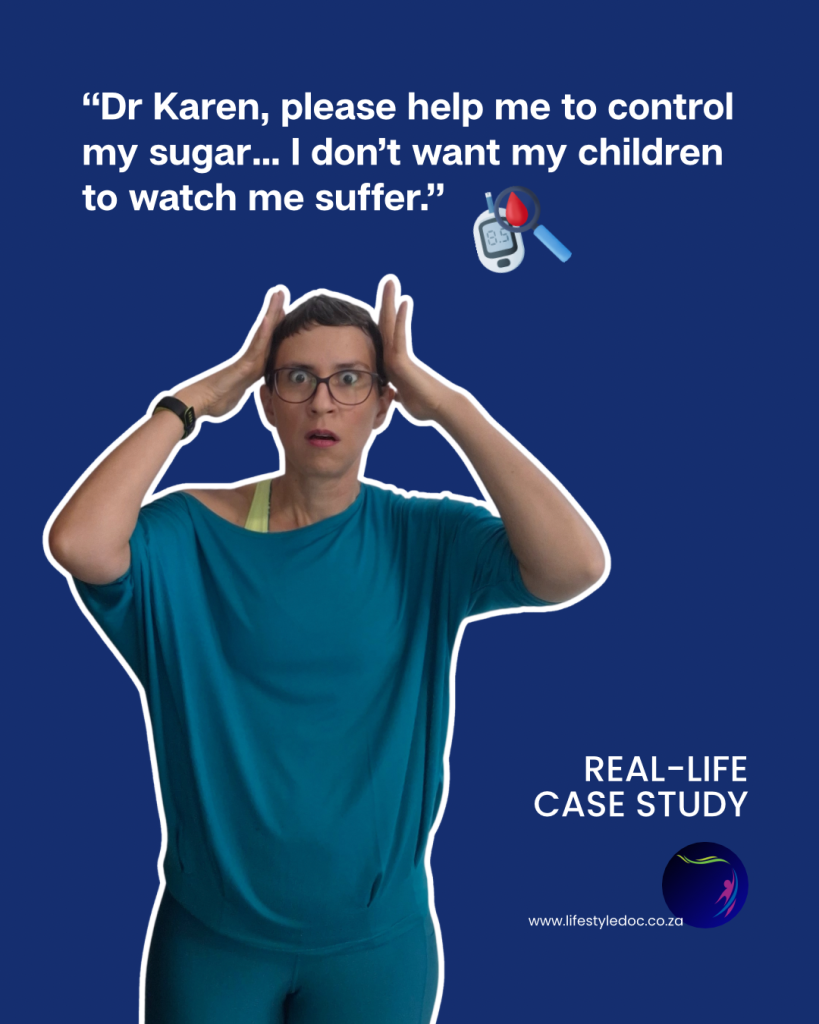
‘Dr Karen, please help me to control my sugar… I don’t want my children to watch me suffer’.
Ms IK did not have much time for exercise although she would go for a walk on the beach once a week.
I asked her to wear a continuous glucose monitor and record what she ate so I could understand what was happening in her body during her normal daily routine. Here’s a breakdown of her food intake for one day and her glucose readings. (Normal glucose = 4.0-6.0):
Wake up. Glucose 6.2. Tea with honey. 2 pieces of bread with margarine and jam. Fruit salad (papaya, banana, mango and pineapple). Glucose: 11.8, which slowly decreased to 9.4 before oat cookies and tea with honey at 10h30. Glucose: 13.6. Down to 10.3 before lunch. Flat bread with vegetable curry. Banana and fruit yoghurt. Glucose 14.1. This decreased gradually to 12.0 before an afternoon snack: Fried chickpea savoury snacks with bread and margarine. Glucose 16.3. Before dinner, her glucose was 12.9. Dinner: Rice, lentils and vegetable curry with grilled paneer cheese followed by fruits (mandarin, apple and pear slices) and 1 piece of dark chocolate. Glucose: 14.3.
Tea with lemon just before bed. Her glucose was 13.5.
She could see clearly that whenever she ate, her blood sugar would increase and it would stay elevated for hours. She never achieved a normal blood sugar reading during the 2 weeks that she wore a glucose monitor. I was scared for her.
I explained to her that her genetics were not in her favour, but that if she changed her eating habits and incorporated physical exercise into her routine, it would be possible to control her blood sugar without medications. She was super-motivated.
I suggested the following changes:
- Start your day with protein + healthy fats + fibre. Breakfast should be savoury, not sweet.
- Apple cider vinegar before any meals containing carbs.
- Start your meal with vegetables/salad.
- Eat more protein.
- Choose carbs that are unrefined (wholegrains instead of white bread / flour and white rice).
- Don’t snack. If you need to snack… Eat veggies and protein and fat.
- Move after your meal. Even 5 minutes of physical activity makes a difference.
- Choose the right sugar substitute. Stevia is the best ‘natural’ non-nutritive sweetener for people with blood sugar issues.
This is what she did:
Breakfast: Warm water with apple cider vinegar (ACV) before her meal. 1 slice of whole-grain toast with generous hummus and cheese. Tea with stevia instead of honey. Chia seed pudding made with coconut cream, stevia and vanilla. Berries instead of tropical fruits. Glucose after breakfast: 7.6.
No snack. Tea with stevia or herbal tea instead of tea with honey. Glucose 5.9.
Lunch: ACV in water before her meal. Large serving of salad before her meal. Wholegrain flat bread. Lentils. Hummus. Paneer. Natural unsweetened yoghurt with almond flakes and toasted coconut shavings sweetened with stevia. Water to drink. Glucose: 7.2.
Afternoon snack: Cherry tomatoes, cucumber batons, carrot sticks, mixed nuts and cream cheese. Tea with stevia. Glucose: 6.2.
Dinner: ACV before her meal. Large serving of salad as a starter. Quinoa, lentils or beans, soya chunk curry. Raita. 2 pieces of dark chocolate. Glucose: 7.4.
10 minutes of walking on the spot in front of the TV after dinner. Glucose 90 minutes after dinner: 5.9.
Herbal tea infusion before bed: Glucose: 5.6.
Here’s a graph of her blood sugar readings before and after the changes she agreed to implement:
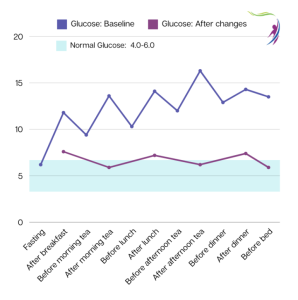
Ms IK did not need medications. She continues to follow a lower-carb, plant-based diet and her blood sugar rarely spikes above 7.5. Her average blood glucose is 5.6.
This case illustrates that blood sugar is directly related to the foods that we eat. Even if you have a family history of diabetes, it is not your destiny to develop diabetes or suffer the complications.
Type 2 diabetes can be managed and reversed with lifestyle change.
Download Your Simple Steps To Improve Your Blood Sugar Guide
If you want to learn more about the specific lifestyle strategies you can apply to improve your blood sugar, check out my book on Amazon: https://a.co/d/2vODsXW